Pectus Excavatum and Back Pain: Daniel's Reported Pain Reduction
Training regularly, but still feeling restricted
In 2017, Daniel Tahmazis was 22 years old and following a conventional bodybuilding program four to five times a week. His exercises included bench presses, squats, deadlifts and shoulder presses.
Daniel has pectus excavatum. He described recurring muscular tightness, difficulty engaging his lats, pecs and glutes, and pain affecting his shoulders, neck, left hip and lower back. His body frequently felt “restricted and locked up,” even though he trained consistently.
Temporary relief, then the tightness returned
Daniel had tried conventional strength training, stretching, massage therapy, osteopathy, physiotherapy and chiropractic care. He also played soccer.
Stretching between sessions did not provide lasting relief. He found myofascial release (MFR) the most helpful of the treatments he tried, but reported that discomfort generally returned after about a week.
At the time, he was eating a high-carbohydrate diet with an emphasis on grains and using mass gainers. He also experienced bloating and facial acne.
Switching to Functional Patterns training
By his 2025 update at age 30, Daniel reported training exclusively with Functional Patterns methods. He described using exercises and myofascial release to manage his own symptoms rather than attending regular allied health treatment appointments.
He also changed his nutrition to a mostly animal-based diet with meat, fish, eggs and dairy, alongside fruit and vegetables. His account does not specify his exact Functional Patterns training start date, weekly frequency or practitioner.
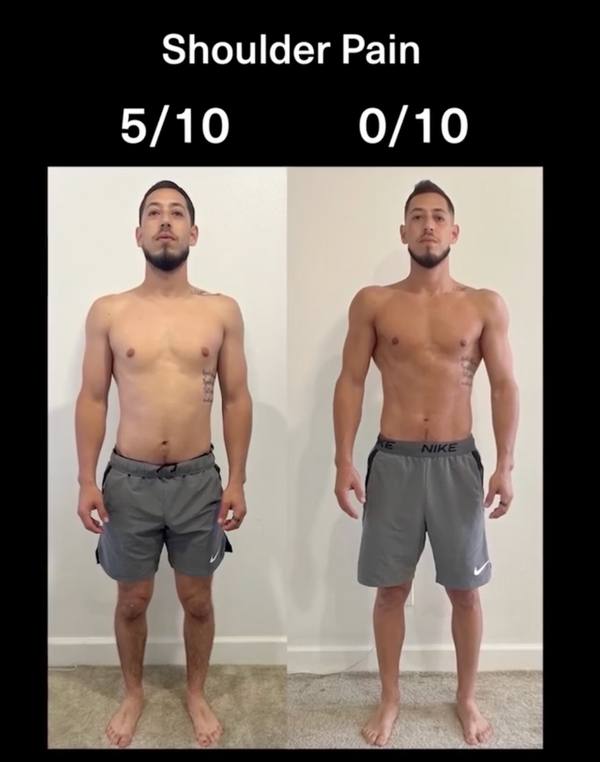
Before and after: 2017 and 2025
These original comparison photographs show Daniel at age 22 in 2017 and age 30 in 2025. The left side of each image is before; the right side is after.


Lower pain scores and more freedom to move
| Area | 2017 | 2025 |
|---|---|---|
| Shoulder / neck* | 4/10 | 0/10 |
| Left hip / hip | 4/10 | 0/10 |
| Lower back | 5/10 | 1/10 |
*The baseline score covered shoulder and neck discomfort; the follow-up score specifically referenced the shoulder.
Beyond the pain scores, Daniel reported easier muscle activation, better overall core engagement and substantially improved kinesthetic awareness. He felt more confident exploring 360-degree movements and sprinting again.
He also reported higher energy, no longer feeling bloated and the disappearance of facial acne. These changes happened alongside both training and dietary adjustments, so individual causes cannot be isolated from this account.
What Daniel says now
“Have much more confidence experimenting with 360 movements and sprinting again”
Daniel's words reflect a change in his confidence with movement, not just a numerical pain score.