INTRODUCTION
When most people set out to lose weight, the first thing they reach for is a lower number: fewer calories, smaller portions, more cardio. But as we've discussed before, the quality of what you consume matters more than the quantity. If your body is chronically inflamed, bloated, and running on poor fuel, it becomes that much harder to move well, recover well, and hold a better structure.
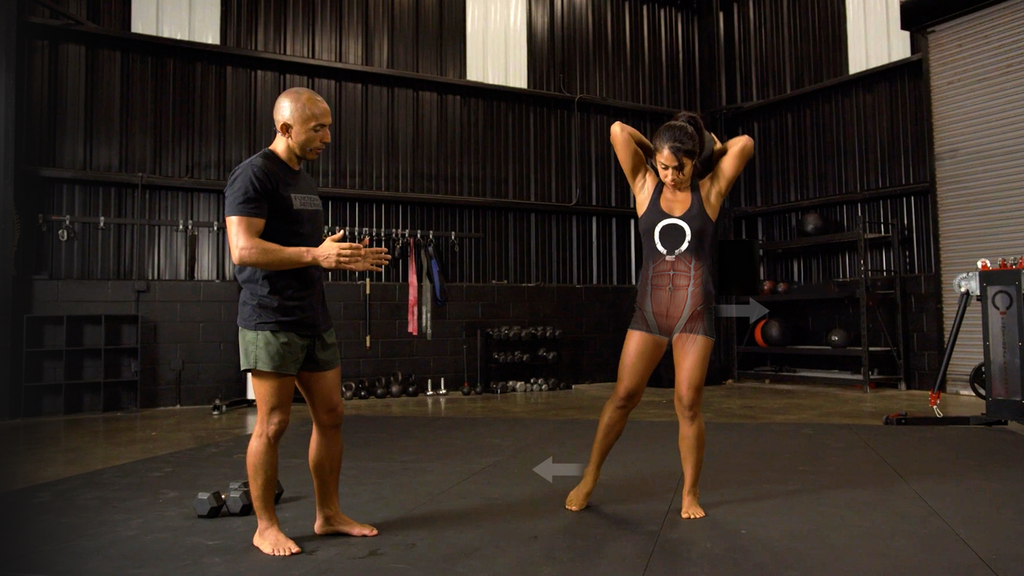
That's exactly what Alicia found. Over 4 years, Alicia has lost 25lbs while training through the Functional Patterns methodology, rebuilding how she stands, walks, and moves. The training reshaped her structure. But she's the first to say that changing what was on her plate is what let that progress show up and stick.
"Not only is my body moving better and my bloating is to a minimum, I find that my energy levels are better than they have ever been as I approach 40. And that's all due to how I train and what I put in my body."

Alicia, before (left) and 4 into her Functional Patterns training with an anti-inflammatory diet (right).
Below are the three dietary shifts that made the biggest difference for Alicia. None of them involve counting calories. All of them are about removing what promotes inflammation and replacing it with food your body can actually use.
TIP 1: CUT OUT GRAINS, SEEDS, AND NUTS
The first and arguably most impactful change Alicia made was removing grains entirely. That means bread, pasta, pastries, tortillas, crackers, cereal, and oats, along with seeds and nuts, which carry many of the same defensive compounds. Grains are seeds themselves. Plants equip their seeds with irritants such as lectins, phytates, and gluten to discourage being eaten, and those compounds don't disappear just because the seed has been milled into flour.
Gluten and the gut lining
Gluten is the most well known of these compounds. Research has shown that gliadin, a protein in gluten, can trigger the release of zonulin, a molecule that regulates the tight junctions between the cells of your intestinal wall. When those junctions loosen, the gut becomes more permeable, a state commonly referred to as "leaky gut." A more permeable gut may allow undigested food particles and bacterial byproducts to pass where they shouldn't, which can keep the immune system in a constant low-grade state of alarm. That is chronic inflammation, and it doesn't stay in the gut.
From a Functional Patterns perspective, this matters for more than digestion. An inflamed, distended gut sits right in the middle of your core. In our field experience, it's very difficult to establish good core activation and a stable pelvis when the abdominal contents are swollen and irritated.
Grains and energy levels
Refined grains break down into sugar quickly. The result is a spike in blood glucose followed by a crash, which shows up as the mid-afternoon slump, brain fog, and cravings for more of the same. Many people assume this is normal. It isn't, and it often improves noticeably once grains are removed.
What to eat instead of bread
Removing grains doesn't mean your plate has to feel empty. These are the sides Alicia rotates in place of bread, pasta, and tortillas:
- Carrot salad: crunchy, fresh, and an easy way to add fiber
- Roasted beets: naturally sweet and filling
- Sautéed zucchini and squash: quick to make and pairs with any protein
- Pickled onions or kimchi: fermented foods that provide probiotics to support the gut
- Cucumber salad: light and hydrating
- Roasted sweet potato: a satisfying carbohydrate source that won't irritate the gut the way grains can
What Alicia noticed: [PLACEHOLDER: what changed for Alicia after cutting grains, e.g. less bloating, steadier energy, how many weeks before she noticed.]
Try this: Remove all grains, seeds, and nuts for 30 days, then pay attention to how your stomach, energy, and training sessions feel. Replace them with root vegetables like sweet potatoes, squash, and fruit for carbohydrates.
TIP 2: ELIMINATE SEED OILS
Canola, soybean, corn, sunflower, safflower, cottonseed, and grapeseed oil are in nearly every packaged food, restaurant fryer, and salad dressing on the shelf. They were marketed for decades as "heart healthy." Yet there is evidence to suggest they are one of the largest drivers of inflammation in the modern diet, primarily because of how much omega-6 they contain.
The omega-6 to omega-3 ratio
Omega-6 and omega-3 fats are both essential, but they play opposing roles. Omega-6 fats, mainly linoleic acid, serve as building blocks for compounds that promote inflammation. Omega-3 fats are precursors to compounds that help resolve it. You need both, in balance.
Researchers estimate that humans evolved eating these fats at a ratio of roughly 1:1 to 4:1. The typical Western diet today is estimated at 15:1 or higher, largely due to seed oils. When the ratio skews that far, the body may be primed toward a more inflammatory state, and this imbalance has been associated with cardiovascular disease, autoimmune conditions, arthritis, and inflammatory bowel conditions.
Bloating and other downsides
Seed oils are highly unstable. They oxidize easily when heated and reused, which is exactly what happens in a restaurant fryer. Oxidized fats can irritate the gut lining, and an irritated gut tends to be a bloated one. Alongside that, foods cooked in seed oils are almost always processed, salty, and grain-based, which compounds the problem. Other downsides linked to high omega-6 intake include:
- Water retention and puffiness that can mask fat loss
- Slower recovery and more joint soreness after training
- Skin flare-ups and breakouts
- Increased cravings and difficulty feeling full

Try this: Clear seed oils out of your pantry and read every label. Cook with stable animal fats instead, such as grass-fed butter, ghee, tallow, or lard, and use extra virgin olive oil or avocado oil at low heat. When eating out, ask what the kitchen cooks with.
TIP 3: MAKE SEAFOOD YOUR PRIMARY PROTEIN
Removing inflammatory foods is only half the equation. The other half is rebuilding with food that actively supports recovery. For Alicia, that meant making seafood the foundation of most meals.
Salmon and sardines for omega-3s
If seed oils push the omega-6 to omega-3 ratio in the wrong direction, fatty fish pull it back. Salmon and sardines are two of the richest sources of EPA and DHA, the forms of omega-3 the body uses most directly. These fats are precursors to compounds that help the body resolve inflammation, and they support the recovery of tissues under constant demand from training.
Sardines deserve special mention. They're small, low on the food chain, inexpensive, and eaten whole with the bones, so you get calcium along with the protein and fat. Wild-caught salmon is preferable to farmed where possible.
Shrimp and cod for lean protein
When the goal is fat loss without sacrificing muscle, shrimp and whitefish like cod are hard to beat. They deliver a high amount of protein for very few calories, which helps you stay full and preserve lean tissue while you lose fat.
| Seafood (cooked, ~100 g) | Calories | Protein | Omega-3 (EPA + DHA) |
|---|---|---|---|
| Salmon, wild | ~180 | ~25 g | ~1.5–2 g |
| Sardines, canned | ~210 | ~25 g | ~1–1.5 g |
| Shrimp | ~100 | ~24 g | Low |
| Cod | ~105 | ~23 g | Low |

Try this: Aim for fatty fish like salmon or sardines at least three to four times per week, and lean on shrimp and cod for the rest. Pair them with vegetables, fruit, and root vegetables cooked in animal fats.
CONCLUSION
Alicia's results didn't come from eating less. They came from eating intentionally: removing grains, cutting seed oils, and building her meals around seafood. Each of these shifts lowers the inflammatory load on the body, and a body that isn't fighting itself is far more capable of adapting to better movement.
That's the piece most diets miss. Nutrition can reduce the noise, but structure is built through how you move. Alicia paired these changes with consistent Functional Patterns training, retraining how she stands, walks, and runs, and the combination is what produced the change you see above.
Along with changing how you eat, you need to take a corrective perspective toward movement. Most people are told the answer is simply to exercise more. But if your body can't move properly, more exercise only piles load onto poor mechanics, which can mean more pain, more injuries, and more inflammation. In order to exercise more, you first need to be able to move well. That's why Alicia's training focused on correcting how she stands, walks, and runs before chasing volume, so every session built her structure instead of breaking it down.
If you're ready to start your own transformation, check out the Functional Patterns 10-Week Online Program and begin building the structure to support it.
Until next time, this is Functional Patterns reminding you to Eat Intentionally, and Not Habitually.