On October 21 2026, Tyrese Haliburton played his first game that counted in 486 days. The last time he'd played one, his right Achilles tore in the first quarter of Game 7 of the 2025 NBA Finals.
He was the seventh player that season with an Achilles injury. Before 2024–25, the NBA had never had more than four Achilles tears in a single season. That year it had seven, including three All-Stars in one postseason: Jayson Tatum, Damian Lillard and Haliburton.
Why does a tendon in a professional athlete, someone with trainers, medical staff and every recovery tool available, just snap?
And it isn't just the pros. Zoom out from the NBA and the trend is real. In the US, Achilles ruptures in people aged 40 to 59 rose 78% in just five years. In Finland, they nearly doubled in two decades. In Ontario, they rose more than 60% in ten years. People are staying active longer than ever, and their bodies were never taught how to handle it.
The tendon takes what the body won't
The Achilles connects the calf to the heel, so every push-off, landing, cut and step sends force through it. When the body is organized well, that tension is directed into the structures built to handle it. When it isn't, the lower leg does work the rest of the body should be doing, and the Achilles absorbs it rep after rep until it can't.
When you look at how these injuries happen, the majority are non-contact. Most people, athletes included, never learn to move the correct way. They only get “strong” in isolated pieces, they’ll train their calves, quads, and glutes separately but never how they are meant to work with one another.

That kind of isolated training ends up causing compression in the body. Traditional training jams joints together when you exert force so you only get strong when there’s joint friction. This weakens the areas that should be keeping joints decompressed leaving you more prone to injury because life demands everything in your body to work together at full speed.

Why stretching it away makes it worse
The second mistake is what people do when their calf or Achilles starts to feel tight. Their instinct is to stretch it.

And although that may seem intuitive, tightness is often the body stabilizing an area that's being asked to do too much. When you stretch it, it becomes loose and you remove that stability without changing what's overloading it. The tension doesn't go away. The area just becomes less stable, and less stable means more injury prone.
Flexibility without control does not equate to resilience.
What actually protects the Achilles
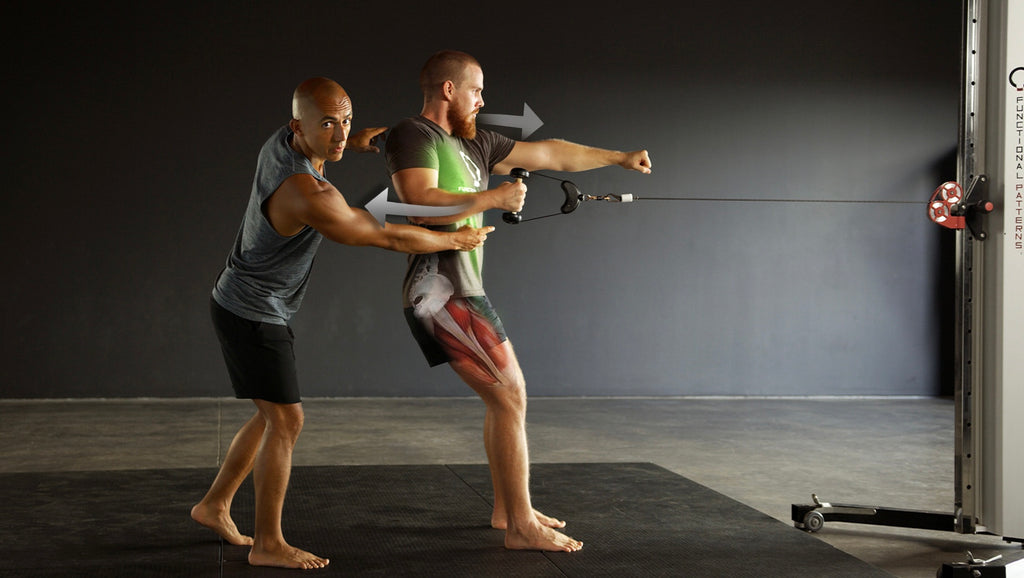
- Train the body to move as one system, humans are built to walk, run and throw as their fundamental functions.
- Build strength through your range of motion, not just more range.
- Address imbalances so a single joint isn’t taking all of the load when you move.
The takeaway
Injuries like this rarely come out of nowhere, they often end up becoming the end result of how people train. Most people don’t consider that how they train doesn’t coincide with our biological blueprint, which ends up going against it and increasing the risk for injuries. When you train in a way that compresses the body, you end up reinforcing poor movement patterns that cause weakness and can eventually lead to injury.
Rest, rehab and stretching only attempt to reduce the symptoms or treat the spot that failed. They don't change the pattern that overloads it, and often the fix is training that accounts for decompression in your body and gets it working as one system, so tension goes where it belongs and no single area carries more than its share.
Train the body as one system
Our 10-Week Online Program shows you how. You’ll have access to the course material for 1 year where you’ll learn how to release the adhesions that lock your body down, learn proper posture, and train with a library of exercises designed to strengthen the body the way it’s meant to work. You can do it from home, and you’ll be working on the cause instead of the spot that hurts.