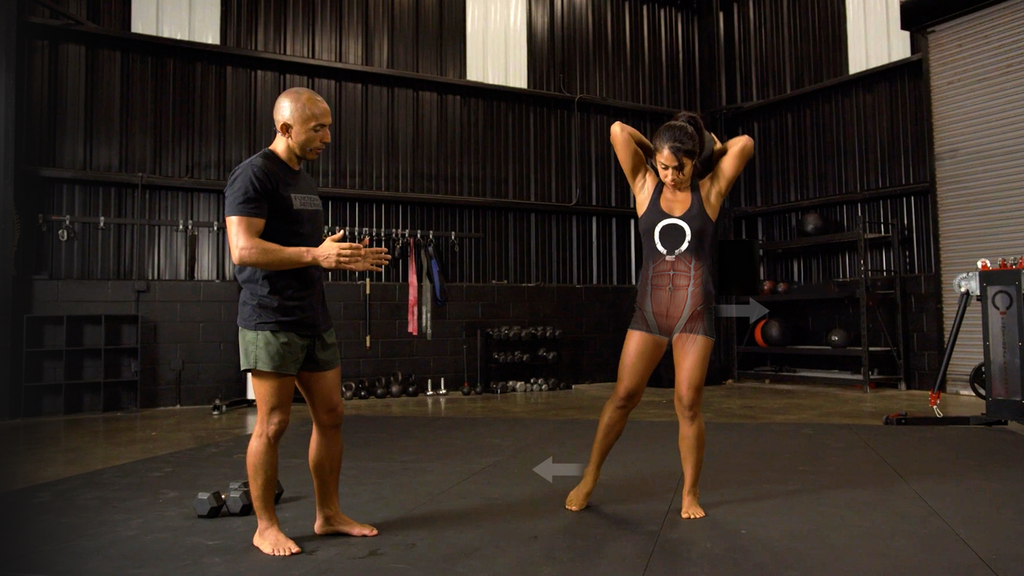
Does this sound familiar? You stretch your hips in the morning, or you roll them out after work and for an hour, everything feels loose, but by the next morning, they're locked up again.
If that cycle sounds familiar, the problem isn't your hips. The problem is how you stand, sit, walk, and move the rest of the day. Chronic hip tightness is a posture problem, and bad posture is a movement problem. Every step you take from a poor foundation teaches your hips to tighten back up. Until you change how you move, no amount of stretching or mobility work will make the relief last.
Your Posture Is Where Hip Tightness Starts
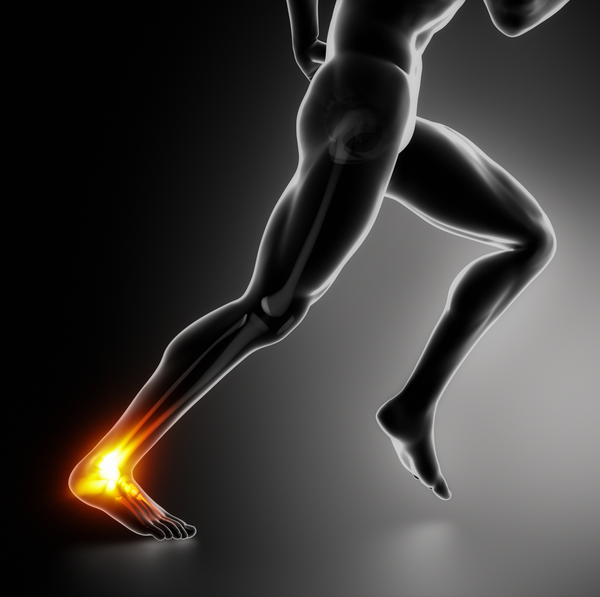
Your hip flexors aren't one muscle. They're a group of muscles (psoas, iliacus, rectus femoris, pectineus, and sartorius) that connect your spine and pelvis to your thighs. They respond to how your pelvis reacts when you move, so if your pelvis is out of position when you move, your hip flexors have to work that much more to stabilize your pelvis.
Most people with chronic hip tightness stand with their pelvis ahead of their ribs and lower back over-arched. That position creates compression around the hip while the glutes and core switch off. So your hip flexors pick up the slack. They grip and brace to keep you upright, all day, every day.
That tightness you feel isn't random. It's your hip flexors holding on because nothing else is.

Every Step Reinforces the Pattern
Posture is more than how you stand, it's the starting point for every movement you make. If you begin from a poor position, you’re going to walk, climb stairs, get out of the car, and lift groceries from that same position.
That means thousands of repetitions a day of the same pattern. Each repetition trains your hips to stay tight. Sitting isn't the problem, it's how you move before you sit.
Think about it like this: Your body is very good at adapting to what you do most and right now, what you do most is move in a way that keeps your hips locked up.
Why Stretching and Mobility Work Don't Stick
Stretching and mobility drills will often aim to create excessive ranges of motion. When you mobilize a joint past a functional range, that ends up making your tendons and ligaments lax to where you end up with more compression in your body because there’s nothing supporting your joints.

Stretching and mobility routines work around the problem instead of through it. If you can't control your pelvis, and the rest of your body, by moving the correct way, your hip tightness will never go away.
The Technique: Release and Relearn
To unlock your hips, we’ll show you how to release tension and prep muscles for better activation:
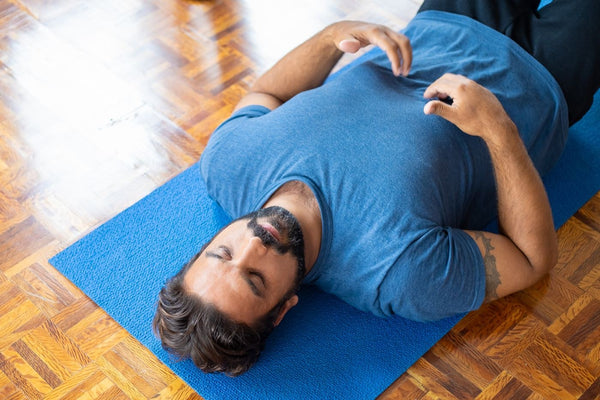
Myofascial release on the rectus femoris: Use a ball or roller on the front of your thigh, just below the hip. Slow, sustained pressure lets the tissue soften so the hip can open.
When your movement is off, certain areas in your body will tend to coagulate. Think of it like a busy highway where things get stuck. This release technique done the right way will open up the areas that are stuck and prime muscles like your glutes and core to move like you’re meant to.
The Real Fix: Learn to Move Well
This technique will definitely help, but it’s only a starting point. Lasting relief comes from changing the way you move. Our 10-Week Online Program teaches you how: release tight tissues, correct your posture, then train your body to hold it under load. It only takes 25 minutes a day, 4 days a week, and you can do it from home.
- Phase 1: Free up stiff muscles without overstretching ligaments so muscles fire properly.
- Phase 2: Learn what good posture is and identify the specific imbalances holding your body back.
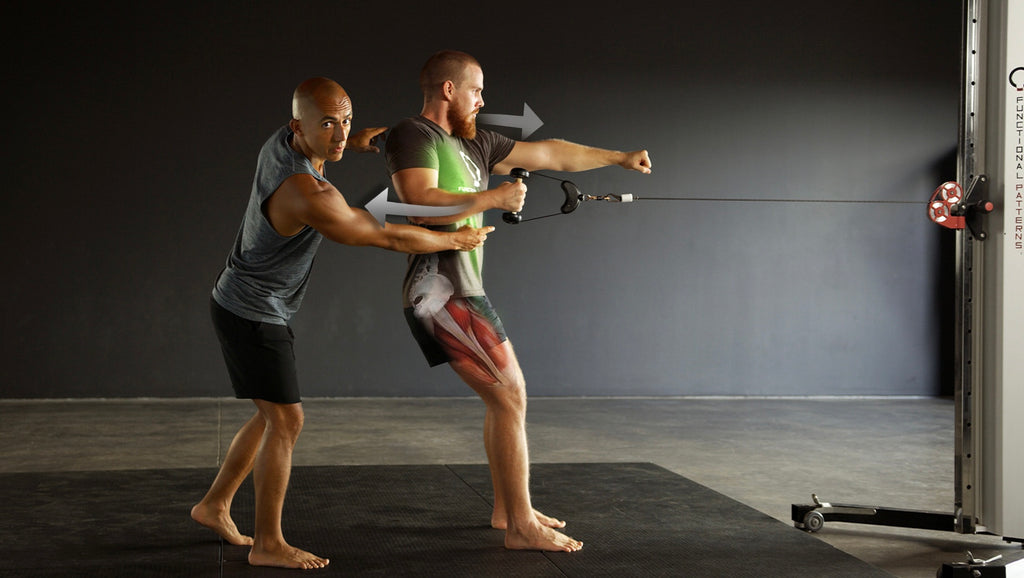
- Phase 3: Apply resistance without compromising alignment and train your muscles to support your joints.
When the way you move changes, your hips stop tightening back up.