Everyone knows someone on TRT. You see it all over social media, your gym buddy started a few months ago and won’t stop talking about how good he feels or the guy at the office swears it changed his life.
That's not your imagination, testosterone prescriptions grew 1,100% between 2000 and 2025, per IQVIA. Among young men, the trend now has its own name: "t-maxxing." Influencers are selling it as a shortcut, promising that a weekly shot will unlock your highest potential.
Here's what they leave out.
What TRT is and how we got here
TRT, or testosterone replacement therapy, means taking testosterone from an external source, whether through injections, gels, patches, or pellets, to raise the levels in your blood. It was built as a medical treatment for hypogonadism, a condition where the body can't produce enough testosterone on its own, and for most of its history that's exactly how it was used.
The fascination with it goes back further than you'd think. In 1889, an aging French physiologist named Charles-Édouard Brown-Séquard injected himself with fluid extracted from dog and guinea pig testicles and told a Paris medical society that he felt decades younger, and although his so-called elixir did little more than produce a placebo effect, the idea that a man's vitality could come out of a syringe caught on right away. Testosterone itself was finally isolated and synthesized in 1935, and for the next several decades it stayed mostly in the hands of doctors treating men with genuine deficiencies, with longer-acting injections becoming the standard by the 1950s.
The turning point came in 2000, when the FDA approved AndroGel, a testosterone gel men could rub onto their shoulders at home. Its maker soon rebranded age-related testosterone decline under a much catchier name, "Low T," and poured money into ads that turned everyday complaints like fatigue, weight gain, and low sex drive into symptoms of a condition you could treat. It worked, and testosterone use in the US tripled between 2001 and 2011, mostly among men without a clear medical reason to be on it, with roughly a quarter of men over 40 being prescribed it without ever having their levels checked.
The boom stalled in 2014, when studies linking testosterone to heart attacks and strokes led the FDA to issue a safety warning, and between 2013 and 2016 the share of American men on TRT dropped by nearly half. The slowdown didn't last, though. Telehealth made it possible to get a prescription without ever setting foot in a doctor's office, men's health clinics started opening in strip malls across the country, and in 2025 the FDA removed the cardiovascular warning from testosterone labels after a large trial called TRAVERSE found no added heart risk in men being treated for low testosterone. By then, a new wave of influencers had already picked up where the ad campaigns left off, and this time they were selling it to men in their twenties.
That's how you get to 1,100%.
Muscle built on a dysfunctional structure
Most men start TRT because they want to feel stronger, look better, and have more energy. On paper it delivers, since more testosterone means more muscle. What nobody stops to ask is what that muscle is being added to. Your muscles are attached to a skeleton, and the way that skeleton is organized, how you stand, walk, and distribute load, decides which muscles do the work and which joints take the beating.

If your body were a building, TRT would be like pouring more concrete onto it without ever touching the foundation, so whatever patterns you operate from when you take TRT are the ones it builds on.
Yes, TRT will pack on muscle, but it does nothing to change the way you move, so whatever imbalances you bring in are the ones it builds on. If you walk with one hip hiked, or your ribs flare, every rep you do reinforces that frame.
What you end up with isn't a stronger body so much as a bigger version of the same problem, which is why so many guys on TRT build muscle, but end up in pain and not being able to move athletically.
Low T is a symptom
Men's testosterone has been falling for decades, and the drop is steeper than most people realize. Average levels have declined roughly 1% a year since the late 1980s, and recent research puts the total decline at more than half over the last fifty years, which means a 30-year-old today is likely walking around with noticeably less testosterone than his father had at the same age.

The usual suspects are well documented. Obesity sits near the top of the list, because fat tissue converts testosterone into estrogen, so the more of it you carry, the more testosterone you lose. Chronic stress keeps cortisol elevated, which works directly against testosterone production, and poor sleep makes it worse, since most of your daily testosterone is produced while you sleep. Sedentary living plays its part too, but people tend to be more sedentary when moving doesn’t feel good in the first place. Then there are endocrine disruptors, chemicals found in plastics, pesticides, and personal care products that interfere with the way your body makes and uses hormones.
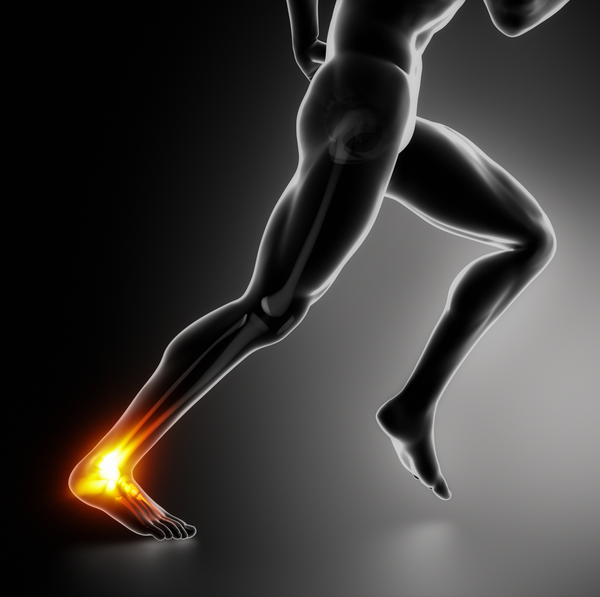
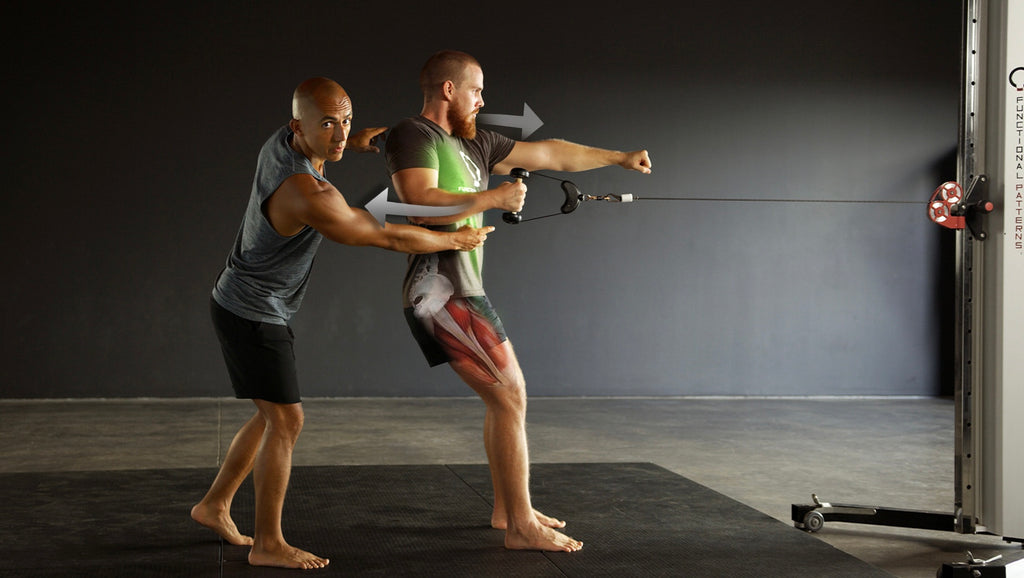
Humans are built around what we call the FP First 4: standing, walking, running, and throwing, and when you can't perform these four functions efficiently, your body can't access the muscles those movements are supposed to recruit. Your glutes stop driving you forward when you walk, your pecs and lats stop working together to rotate your trunk, and every muscle in between is left to pick up the slack, pulling the whole system further out of balance. When you don't use your muscles, they end up atrophying.
Additionally, a body that's chronically out of balance is fighting itself every time it moves, and that constant strain keeps stress hormones elevated. Since cortisol works directly against testosterone production, poor mechanics end up feeding the same problem that weight gain, bad sleep, and stress already create.
If you train your structure the right way, you can build muscle, and sustain it into old age, without outsourcing it to a prescription drug.
Borrowed muscle
The muscle you gain on TRT is borrowed. It's held up by an external hormone you're supplying periodically, and it only stays as long as that supply keeps coming.

Your body is very quick to adapt. Testosterone production runs on a feedback loop between your brain and your testes: when your brain senses that levels are low, it sends out a signal called luteinizing hormone that tells your testes to make more, and when levels are high, it backs off. Once testosterone is coming in from a needle, your brain reads those levels as more than enough and stops sending the signal, so your testes, with nothing telling them to continue to work, slow down and start to shrink.
Within a few months, most men on TRT are making little to none of their own testosterone, which means TRT isn't adding to your natural production anymore, it's replacing it. Every bit of muscle you've built, along with the energy and drive that came with it, now depends on a prescription you have to keep refilling for the rest of your life.
What happens when you come off
The moment you stop TRT, you're left with a system that's been switched off, sometimes for years. Your brain has to restart the signal it stopped sending, and your testes have to start responding again, which can take months. Many men who go on TRT never get off, and for some of those who do, natural production never fully comes back.
The muscle that was “built” up by outside testosterone goes, and it goes fast, because during that gap you're running on less testosterone than you had before you ever started.
More importantly, the mechanics that were driving the problem were never addressed. You lose the mass and the dysfunctions get reinforced to a higher degree because the extra testosterone helps you exercise more, for longer, and lift heavier, so your mechanics are now worse off than before you started, and you're left with a weaker body and a hormone system that's still trying to restart.
That's before the other costs: fertility problems, testicular shrinkage, and dependence on a prescription you have to keep paying for.
Fix the structure first
For most men wanting to get on TRT, they are chasing it as an upgrade, it's a patch over a mechanical problem.
Fix how you move, and you give your body the conditions to produce and hold its own strength.
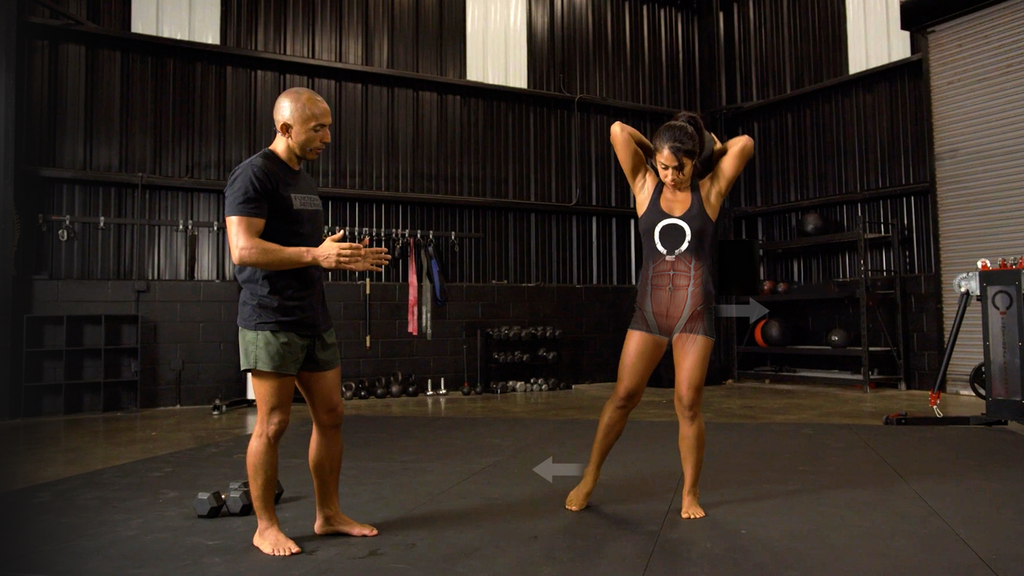
That’s where Functional Patterns comes in. Instead of training muscles in isolation or stacking weight onto a body that’s already compensating, we start by helping you assess how you actually stand and walk.

Results from Filippo Busa
Looking at your posture is paramount to finding where your structure is breaking down and which muscles have stopped doing their job. From there, we teach you how to release the tension your body has built up from years of compensating and show you how to start to retrain the FP first four: standing, walking, running, and throwing.


As your structure improves, the muscles that were shut off start working again, the ones that were overworking get to back off, and the strength you build is spread across a body that can actually carry it. So you can build sustainable muscle as you age.